The Need for Family Counseling in Today's Fast-Paced World
"In family life, love is the oil that eases friction, the cement that binds closer together, and the music that brings harmony." – Friedrich Nietzsche.
Families are facing more pressure than ever before. The demands of one’s profession are increasing every day. There is a growing academic and financial pressure. Technology is also changing the communication patterns between individuals. Social comparisons through digital platforms have become relentless. While families are still sharing physical space, emotional distance is growing quietly and persistently.
Without a doubt, modern life has improved convenience. At the same time, it has reduced meaningful connections. Conversations have invariably shortened. Conflicts remain unresolved for an extended period of time. Emotional stress has individual phenomena rather than a collective problem.
This is where family counseling becomes not just helpful, but an essential requirement.
Family counseling does not state that there is any dysfunction in the family. It is a proactive approach towards understanding, emotional awareness, and balance in the family. In a world where speed is always replacing presence, family therapy allows families to pause, reconnect, and re-establish basic connections.
What Is Family Counseling?
Family therapy is an efficiently planned procedure for therapy. Family therapy is intended to enhance communication patterns, resolve present conflicts, and establish emotional relationships among all family members.
Family therapy considers the family as an integral part rather than an individual. The thought patterns and behaviors of the individual members affect the whole family structure. Many times, a single individual in the family is under stress. This affects the whole family in some way.
Core Objectives for Family Counseling
Family counseling helps families achieve several critical objectives:
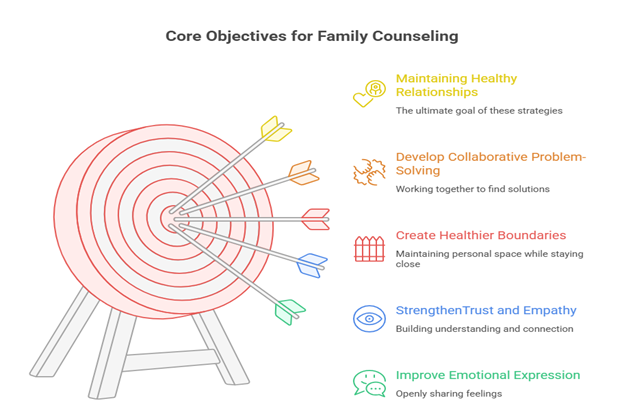
At Dr. Bakshi Healthcare, we work through the process of Family therapy. We create a neutral and safe spot. The main objective is to promote mutual understanding in the family.
Family therapy acknowledges the idea that families operate as systems. A change in one part will naturally affect other parts in the system in turn. Where therapeutic interventions work within systemic patterns instead of just treating isolated behavior alone, such that sustainable improvements become possible.
Why Is Family Counseling Important Today?
Modern families navigate unique stressors that require intentional emotional management and structured support systems.
| Reason | How Counseling Helps (Best & Most Effective Approach) |
|---|---|
| 1. Increasing Stress and Emotional Pressure | Family therapy can help in identifying the causes of stress, developing self-control and stress management techniques, reducing reactive behavior, enhancing mutual support, and preventing small conflicts from becoming chronic resentment. |
| 2. Communication Gaps | Family therapy can help in developing active listening and acceptance, moving from blaming to assertive “I” statements, changing unhealthy communication patterns, enhancing conflict resolution, increasing emotional expression, and finally trying to rebuild trust. |
| 3. Generational Differences | Family therapy offers a chance to engage people in guided communication, accepts different values without judgment, moves from conflict to value differences, helps in healthy boundary setting, and facilitates balanced compromise. |
| 4. Managing Major Life Changes | It helps families adjust to changing responsibilities. It helps to manage grief. At the same time, to develop coping mechanisms. |
| 5. Supporting Mental and Emotional Well-being | It provides a clear understanding of mental health concerns. It helps in fighting stigma and blame. |
Who Can Benefit from Family Counseling?
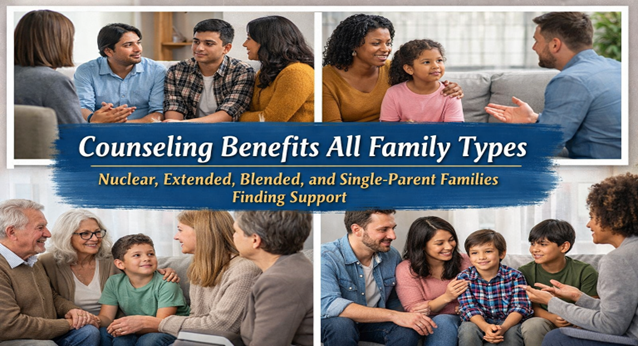
By this theory,family counseling offers the family a kind of counseling program that is genuinely meaningful, helping families of various structures cope in the face not only with changes that come with life but also with how they feel about themselves and life in general. It provides space for constructive feedback.
Professional intervention can be helpful for:
- Families caught in ongoing fights over unresolved issues.
- Parents struggling with behavior, academic pressure, or identity issues.
- Couples whose different parenting styles are causing strain in the relationship.
- Families adjusting to life after divorce learn healthy patterns for co-parenting.
- Households with chronic medical conditions require continuous caregiving and adjustment.
- Families processing grief and the emotional transitions of mourning a relative.
- Members who feel emotionally estranged from each other despite sharing a home.
- Blended families who are struggling with new stepfamily roles and expectations.
- Multi-generational households navigating boundaries
It's worth noting that family counseling in today’s fast-paced world is not just for a crisis. It is better to take the advice at the very start. It helps in strengthening the line of communication and deepening emotional bonds. On smaller and more serious disputes, they resolve those issues without them getting worse.
How Family Counseling Helps
Family counseling produces improvements that are measurable. There are visible changes in emotional functioning and relational stability. All this is brought through evidence-based interventions.
-
Identifying Unhealthy Patterns:
Repeat arguments cause many families to go through an interaction cycle. These cycles become natural over time. One person becomes distant, another critical, the first one defensive, and the argument goes on without an end. These cycles are often strengthened over time. In therapy, the family is taught to take things slowly, to observe what is happening, and to break the cycle with real-life therapy tools. Observing patterns is the beginning of change, and that is deep and lasting. -
Strengthening Emotional Expression:
In a modern, busy lifestyle, it is difficult to communicate emotions calmly and productively. They start blaming each other rather than understanding. The emphasis on emotional regulation helps the family become a group project rather than allowing a single person to solve the issue alone. -
Building Trust and Boundaries:
Family systems are also strong when they keep connection and personal space. It is not dynamic that comes on the spot, and no solution falls by natural right and wrong; it requires some kind of intentionality. -
Enhancing Problem-Solving Skills:
Conflicts and arguments occur in every family. The aim of long-term harmony is what every family aspires to. Family therapy assists in directing constructive talk and achieving long-term stability. Teamwork approaches, balanced negotiation, and joint accountability are very important.
The Role of Professional Guidance
Family conflicts are inherently emotionally charged situations, making an objective perspective extraordinarily difficult for family members to maintain independently.
A trained family counselor provides several critical functions:
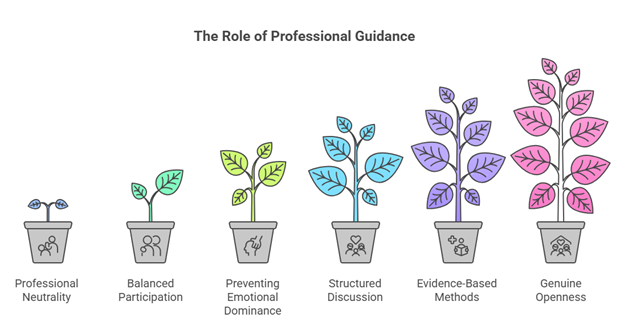
Professional guidance creates structured, safe environments that encourage genuine openness. It advocates emotional vulnerability and mutual accountability among all family members.
At Dr. Bakshi Healthcare, we recognize that every family has its own set of dynamics, cultural issues, and concerns. Our skilled mental health professionals can provide scientifically supported and ethically informed care.
When Should a Family Seek Counseling?
When families recognize that some patterns are getting difficult to handle, they must seek professional assistance immediately. An early step often helps in the long run.
Communication and Conflict Indicators
- Arguments become more frequent and never seem to be resolved
- Communication becomes tense and sometimes awkward.
- Yelling or providing silent treatment to each other.
- Small disputes escalate into huge blowouts
Emotional Distance Indicators
- A clear emotional distance emerges between family members
- Family members spend little time together, even if they are living in the same house
- Routines and simple family moments become fewer and farther between
- A family member feels alone or unheard
Behavioral Change Indicators
- The behavior of a child suddenly alters at home or in school
- Adolescents suddenly start acting distant or rebellious manner
- Symptoms of anxiety, sadness, or emotional distress appear
Life Transition Indicators
- There is major life transition-related instability or adjustment problems
- Family roles and responsibilities have changed without a new understanding
- The family is having problems adjusting to new realities
Mental Health Indicators
- Mental health issues are impacting daily life for any family member
- Stress is a major factor in relationships and mental health
- Members of the family are practicing unhealthy ways of coping. They indulge in substance abuse or emotional eating
Counseling must be sought soon. This prevents long-term relational damage. A delayed decision will allow confusion and anger to surface.Many families feel that they should not seek professional help until problems reach a crisis point. However, family therapy in today’s fast-paced world works best as a preventative measure, not as a crisis intervention service.
How Dr. Bakshi Healthcare Supports Families
At Dr. Bakshi Healthcare, we offer professional family therapy services that are aimed at rebalancing and improving relationships.
Our strategy combines:
Comprehensive Assessment: We start by taking into consideration each family member's point of view. The family system dynamics is also taken into consideration.The family counseling process used is comprehensive, functional, and psychological assessments.
Personalized Treatment Plans: The specific intervention plans are made for every family. Their unique concerns and cultural background are used to make therapy objectives.
Multi-Generational Expertise: We have both clinical psychologists and counseling psychologists. They have advanced expertise in the required domain.
Integrated Care Model: We understand that family stress may be compounded by physical health, nutritional, and lifestyle factors. Our integrated care model addresses these links.
Safe, Non-Judgmental Environment: Families are provided with a warm and confidential space. We recognize that relationship problems in families exist in various forms based on the family situation.
We recognize that relationship concerns within families manifest differently across various life circumstances. We address various types of family concerns. They may range from parenting disagreements to managing behavioral challenges in children. We also look forward to supporting elderly family members or navigating complex blended family dynamics. Our team provides expert guidance grounded in compassion and clinical excellence.
We invite you to take that important first step. Contact Dr. Bakshi Healthcare today to schedule a confidential family counseling consultation. Together, we can help your family navigate challenges and build the resilient, connected relationships you deserve.
Contact Dr. Bakshi Healthcare:
- Location: 32-B, Pusa Road, Old Rajendra Nagar, Delhi – 110005
- Phone: +91-8588-86-8686 | 011-43635555
- Email: [email protected]
Your family's emotional well-being matters. Professional support makes the difference between struggling alone and healing together.
Medical Disclaimer: The information provided in this blog is for general educational purposes only and is not intended as a substitute for professional medical or psychological advice. Always consult with qualified mental health professionals regarding specific family concerns or therapeutic needs.
Author bio: Supriya Prasad is a mental health writer passionate about simplifying psychology for everyday readers. She focuses on emotional well-being, family dynamics, and evidence-based insights that promote healthier relationships and personal growth.


