Healthy Eating Framework for Children: A Complete Guide to Healthy Growth & Development
Imagine a situation that happens at your house. Your child comes into the kitchen immediately after a long day at school. They drop their bags. They open the fridge. They immediately grab chocolate and a packet of chips. And finally, they disappear into their room. It sounds familiar, right? You're not alone in this.
In today's busy world, getting your child to eat healthy is difficult. It feels like trying to sign a peace treaty. But here's the thing. What your child puts into their body today matters. It determines who your child will become tomorrow.
Parents struggle with this. Breakfast battles happen. Dinner table standoffs occur. Sneaky candy stashes are discovered. These situations repeat daily.
But what if creating a nutritional plan for children doesn't have to be hard to implement? What if it doesn't feel like you are climbing Mount Everest? What if it could be simple enough? What if it could work without extra effort?
Let me show you. Not with technical jargon. Not with nutritionist manuals. But with practical advice. Advice that simply works.
Why is Balanced Nutrition Crucial for Children (And Why You Should Care)
Your child's body right now? It's like a construction site! Bones are forming, brain cells are dividing, and immune systems are learning their job! This is a growth spurt that needs fuel, and not just any fuel, premium fuel.
Children who follow a proper nutritional plan maintain a healthy weight. They stay energetic as and when required. They perform better in school and in various activities. It's not magic that is visible. It's just how biology works.
Poor eating habits open the door to problems that go in the long run. Obesity creeps in slowly. Immunity weakens of the child. Fatigue becomes the norm and is visible. Nutritional deficiencies develop in the body. These aren't just statistics to be measured. Unfortunately, the child loses in the long run.
Here is where a children's dietitian or a child nutrition specialist comes in. With proper child nutrition counseling, families can build habits that last a lifetime.
Understanding Nutritional Needs by Age Group
Children's nutritional requirements change over time. This happens as they keep growing. Each age group needs a slightly different combination of food items. Calories may vary accordingly. Vitamins vary. Minerals vary, too.
Nutritional Needs for Toddlers (1–3 Years)
Toddlers grow quickly. They have stomachs that are small in size. They need nutrient-dense meals. Hence, every bite must count.
Important nutrients include calcium. This is for strong bones. Iron is needed. This is for brain development. Healthy fats provide energy. Growing bodies need them.
Recommended foods include milk. Yogurt is beneficial. Mashed fruits work well. Vegetables are important. Eggs provide protein. Soft proteins are easier to digest. Whole grains are essential.
Small meals work best. Frequent snacks are needed. This is best for this age group. Their stomachs are small. Their energy needs are high.
Nutritional Needs for Preschoolers (4–5 Years)
Preschool children become more active. They become curious about food. A balanced diet should include food from all major groups. This variety is important.
Daily meals should contain whole grains. Dairy products are important. Fruits are needed. Vegetables are essential. Protein sources matter. Beans work well. Eggs are versatile. Chicken is popular.
At this stage, introducing a nutritional plan for children helps. It helps develop healthy eating patterns. These patterns form early. They persist later.
Nutritional Needs for School-Age Children (6–12 Years)
School-going children need energy. This energy is for learning. It is for sports. It is for daily activities. A proper, balanced meal for school-going children supports concentration. It supports physical stamina.
Essential nutrients include protein. This is for growth. Iron is needed. This is for brain function. Calcium supports bone development. Bones grow rapidly at this age.
A healthy breakfast is important. Nutritious lunch matters. Balanced snacks are needed. These maintain energy levels. This happens throughout the day. No energy crashes occur.
Nutritional Needs for Teenagers (13–18 Years)
Teenagers experience rapid growth. Hormonal changes occur. Their bodies transform. Their meal should include high protein intake. Muscles develop. Tissues repair.
Calcium is needed. This is for bone density. Iron is essential. This is especially true for adolescent girls. As they go through menstrual cycles every month. Iron in the diet helps in recovery. Healthy carbohydrates provide energy. Sustained energy is crucial.
A child nutrition specialist can help. Teens can maintain healthy eating habits. An unhealthy meal framework can be prevented. Prevention is better than intervention.
Essential Nutrients Every Child Needs
| Nutrient Type | Primary Role | Recommended Sources | Foods to Limit/Avoid |
|---|---|---|---|
| Proteins | It helps in growth, tissue repair, and muscle development | Eggs, A2 milk, paneer, lentils, beans, chicken, fish (with omega-3s), nuts, seeds | Adulterated dairy items |
| Carbohydrates | It is a kind of fuel for daily activities and brain function | Whole grains, millets, brown rice, oats, fruits, and vegetables | Refined sugar |
| Healthy Fats | It is important for brain development and hormone production | Nuts, seeds, avocados, olive oil, fatty fish (with omega-3s) | Fried foods, processed foods (limit severely) |
Vitamins and Minerals
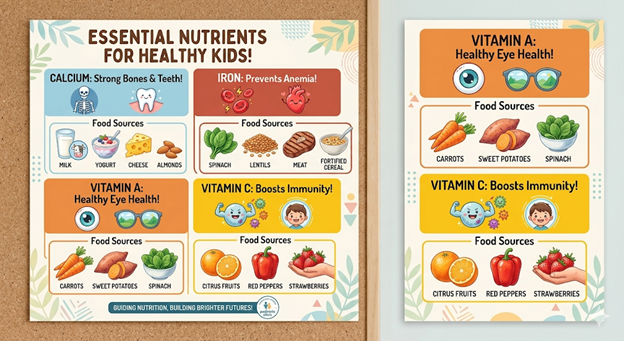
These micronutrients pack massive power. Immunity depends on them. Bone strength requires them. Metabolism runs on them.
| Nutrient | Benefits | Food Sources |
|---|---|---|
| Calcium | Help build strong bones and teeth | Milk, yogurt, cheese |
| Iron | Prevents anemia from developing | Spinach, lentils, meat |
| Vitamin A | Helps maintain eye health | Carrots, sweet potatoes |
| Omega 3 | DHA and EPA in omega-rich food | Nuts and seeds |
Proper child nutrition counseling can help. This ensures children receive these nutrients. This happens regularly. Not occasionally!
Fiber and Hydration
Fiber supports digestion. It prevents constipation. Fruits are excellent sources. Vegetables provide fiber. Whole grains work well. Digestion improves with fiber.
Children should also drink enough water. This should happen throughout the day. Hydration is important. It maintains healthy digestion. It maintains body functions. Water is essential.
Creating Healthy Meal Habits for Children
The Ideal Plate Model
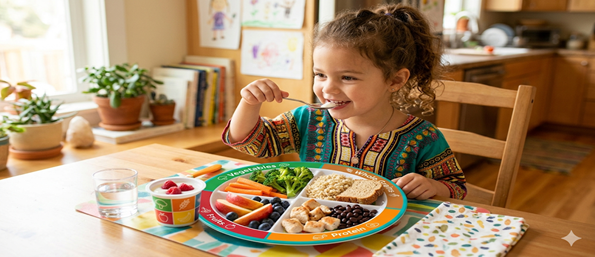
A healthy nutritional plan for children typically includes specific portions. Half the plate should contain fruit. It should contain vegetables. One quarter should be whole grains. One quarter should be protein foods.
Adding dairy products helps. Milk is one option. Yogurt works too. This completes the nutritional chart for children. This model is simple. It is effective.
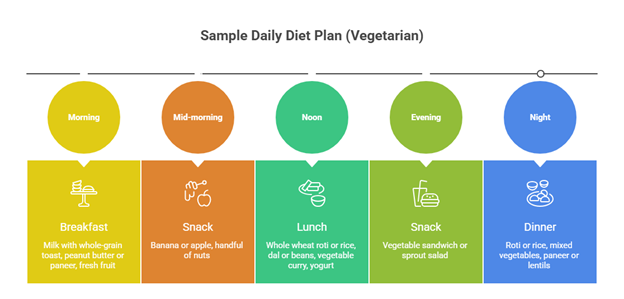
Sample Daily Balanced Nutritional Plan (Vegetarian)
Sample Daily Balanced Nutritional Plan (Non-Vegetarian)
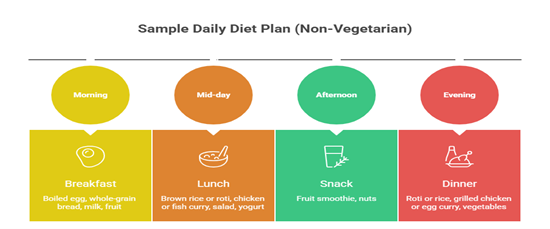
This daily nutrition plan ensures that a child gets balanced nutrition. It ensures sustained energy for the child’s body. It prevents the 3 PM crash that turns these angels into demons all of a sudden.
Healthy Snack Ideas for Children
Healthy snacks maintain energy between meals. Some nutritious options that kids actually enjoy:
- Fruit bowl can be an option. Make them colorful by choosing different colored seasonal fruits.
- Yogurt with berries. This can be a source of sweetness without sugar.
- Homemade popcorn. It helps to skip the butter bath.
- Peanut butter sandwiches. It can be a solid source of protein punch.
- Boiled corn. It is simple and satisfying.
- Smoothies should be given. You can sneak spinach into the smoothies.
These snacks are both nutritious and appealing. They're kid-approved. They are also parent-approved. They are nutritionist-approved, too.
Foods to Limit or Avoid
Some food should be limited. They provide little nutrition. They provide many calories. They cause health problems.
- Examples include sugary drinks.
- Sodas should be avoided.
- Packaged snacks are not ideal.
- Chips should be limited.
- Excessive sweets cause problems. Candies should be restricted.
- Fast food is unhealthy. Highly processed foods should be avoided.
Limiting these foods helps. It helps prevent obesity. It prevents health problems. Prevention is always easier.
Nutritional Plan for Specific Needs
Nutritional Plan for Underweight Children
Underweight children need calorie-dense foods. These foods should still be nutritious. Empty calories do not help.
Helpful foods include nuts. Nut butter works. Figs can be helpful. Dairy products are beneficial. Avocados provide calories. Whole grains help. Eggs are good. Lean meat works too.
A child nutrition specialist may recommend plans. These are personalized meal plans. Individual needs vary.
Nutritional Plan for Overweight Children
For overweight children, focus changes. Balanced meals are important. Physical activity matters. A strict eating framework should be avoided. Growing bodies need fuel.
Recommended strategies include increasing balanced meals. Vegetables should be increased. Sugary drinks should be reduced. Outdoor games should be encouraged. Regular mealtimes should be followed. Junk food should be replaced with home-made snack options such as roasted makhana chaat, ragi chips, home-made nuts, and seed chocolate cracker. Soda and drinks should be replaced with home-made kanji, lemonade, mojitos, watermelon shots, and buttermilk. They are some of the best options.
balanced meal plan for children with Low Immunity
A balanced meal plan for children with low immunity should contain specific types of food. These types of food are rich in antioxidants. These types of food are rich in vitamins as well. Foods that boost immunity are citrus fruits. Green leafy vegetables should be used in such cases.
balanced meal plan for children with Low Immunity
Children with weak immunity need specific foods in their meal plan. These foods are rich in antioxidants. They are rich in vitamins, too. Immunity-boosting foods include citrus fruits. Green leafy vegetables work best in such cases. Yogurt is beneficial for the gut. Nuts and seeds help a lot. Garlic boosts immunity of the body. Ginger works too.
Healthy Meal Habits for Picky Eaters
Picky eating is common. It is common among children. It frustrates parents. Parents can try strategies.
Offer small portions. Present food creatively. Introduce new foods gradually. Avoid forcing children. Do not force them to eat. This creates negative associations.
Professional child nutrition counseling may help. It may help manage persistent picky eating. Sometimes professional help is needed.
Common Nutritional Deficiencies in Children
Some children experience deficiencies. This happens due to a poor meal. Common deficiencies include iron deficiency anemia. Vitamin D deficiency occurs. Calcium deficiency happens. Protein deficiency develops.
Regular health checkups help. Balanced meals help prevent these issues. Prevention is key. Early detection matters.
Importance of Meal Timing and Eating Habits
Consistent meal timing supports digestion. It supports metabolism. Children should ideally have three main meals. Two healthy snacks are needed.
Encouraging family meals also helps. Children develop positive relationships. These relationships are with food. They learn that eating is social. They learn that conversation happens at meals.
Role of Physical Activity Along with a Healthy Meal
A healthy meal works best. This happens when combined with regular physical activity. One without the other is incomplete.
Recommended activities include outdoor sports. Cycling is good. Swimming helps. Walking is beneficial. Yoga works too. Children should aim for activity. At least 60 minutes daily is recommended for a healthy body.
Tips for Parents to Build Healthy Eating Habits
Parents play a key role in this process. They shape children's eating habits. Helpful tips include being a role model for them. Modelling healthy eating should be incorporated by the parents. Involve children in meal preparation whenever you do the task. Keep healthy snacks available on the go. Avoid using food as a reward for your child. Encourage variety in the meals. Variety should be in meals.
Consulting dietitians for children can provide guidance. This guidance is valuable. It supports long-term healthy habits. Professional support helps
When to Consult a Dietitian
Parents should consider professional help. This happens if their child has poor growth. It happens if the child is overweight. It happens if the child is underweight. It happens if food allergies exist. It happens if signs show nutritional deficiencies.
A child nutrition specialist can provide recommendations. These are personalized recommendations. They come through professional child nutrition counseling. Individual needs are addressed.
Why Choose Dr. Bakshi Healthcare for Nutrition Counseling
The right kind of guidance is essential in the long run. It is helpful in following a disciplined and balanced schedule. For children, the nutritional planning service provided by Dr. Bakshi Healthcare is based on a scientific approach. Personal needs are taken care of while creating the plan. Personal factors are also taken into consideration.
-
Comprehensive Assessment
Health professionals evaluate metabolic health first. Nutritional deficiencies are identified. Lifestyle patterns are also examined before creating a nutritional plan. -
Personalized Meal Planning
Nutritional plans are designed according to daily routines. Food preferences are considered. Health goals are also included. This approach helps create sustainable eating habits. The plan is customized so that it can easily blend with the ongoing structure. Interesting meal options are tailored for your child. -
Focus on Metabolic Restoration
The nutrition strategy focuses on improving insulin sensitivity. It also helps reduce inflammation. Digestive health is supported. Hormonal balance is also considered. -
Lifestyle Integration
Nutrition guidance goes beyond food choices. Sleep habits are also addressed. Stress management is considered. Consistent meal timing is encouraged. -
Ongoing Monitoring
Regular follow-ups track progress. Adjustments are made when necessary. This helps maintain steady improvements.
Conclusion
A balanced meal should be provided. This is essential for the development of the child. It is essential for development. By adhering to the chart of a balanced meal for children, the development of healthy habits occurs. By encouraging the development of healthy habits regarding the nutrition of the child, the long-term health of the child improves. By seeking advice from dietitians regarding nutrition, the parent can support the development of the child. Proper nutrition today forms the basis of the future. This forms the basis of the future and lasts a lifetime.
Frequently Asked Questions
What is the most balanced meal plan for children?
The most balanced meal plan is one that includes fruits. It includes vegetables. It is one that includes whole grains and millets. It includes protein. It includes probiotics like curd butter milk. It must be consumed in balanced quantities.
How many meals must children have in a day?
Children must have three meals a day. They must have two healthy snacks in between. This is the most suitable pattern.
What foods must children have to improve their immunity?
Vitamins must be included. Antioxidants must be included. Fruits must be included. Vegetables must be included. Yogurt must be included. Nuts must be included.
Is milk necessary in the framework of the healthy diet of the child?
Milk contains calcium. Milk contains protein. Both are necessary for the development of the bones of the child. There are other sources of these nutrients in the dairy products of the cow. There are calcium-rich foods as well. Milk from the cow with the A2 gene is the best choice. It should be provided only if the child can tolerate it, as each body reacts differently.
When should parents seek child nutrition counseling?
Parents should seek the help of professionals. It occurs when the child displays symptoms of poor growth. It occurs when the child displays abnormal patterns of eating. It occurs when the child displays symptoms of deficiency.


